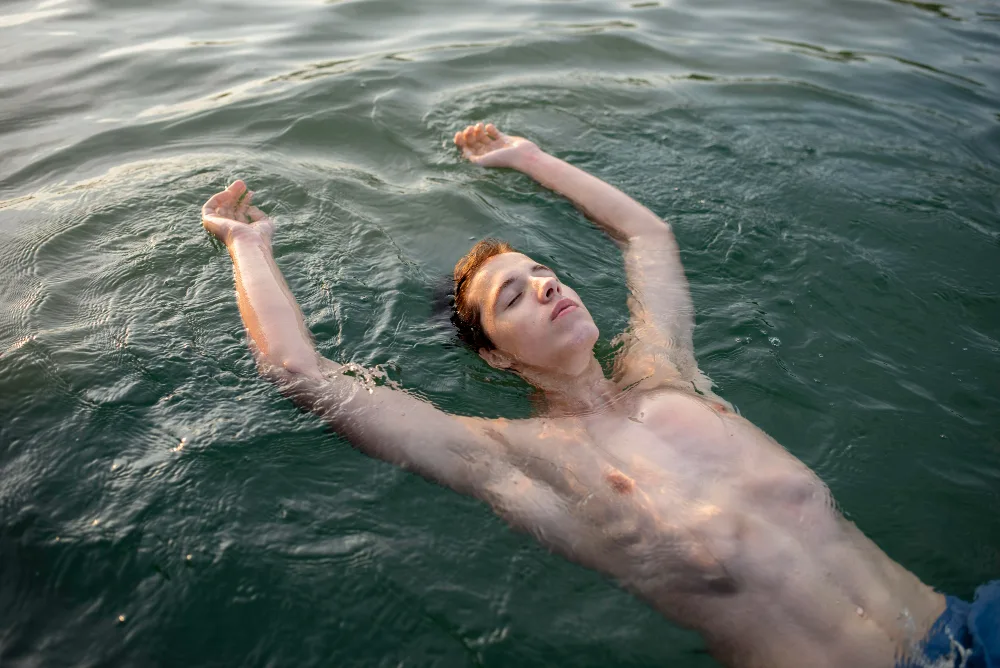
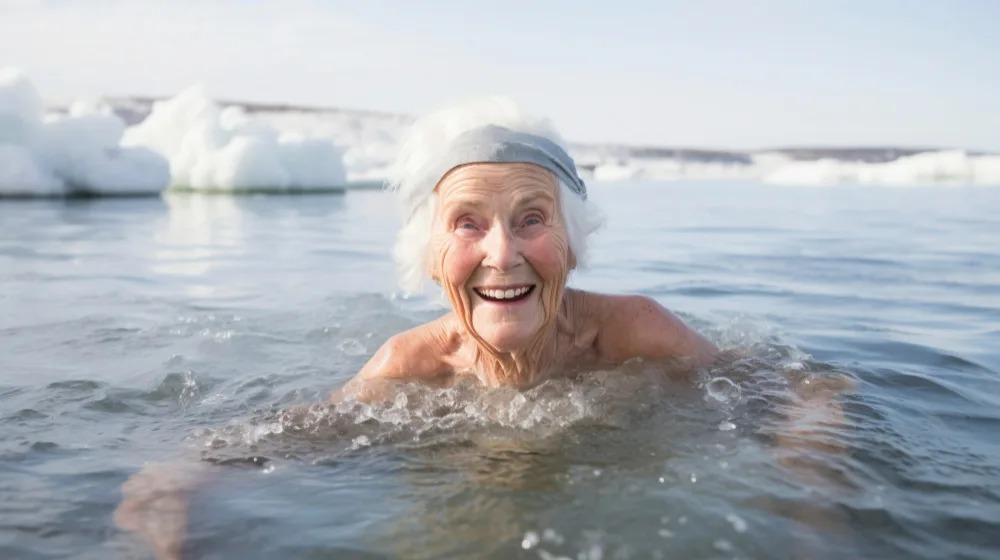
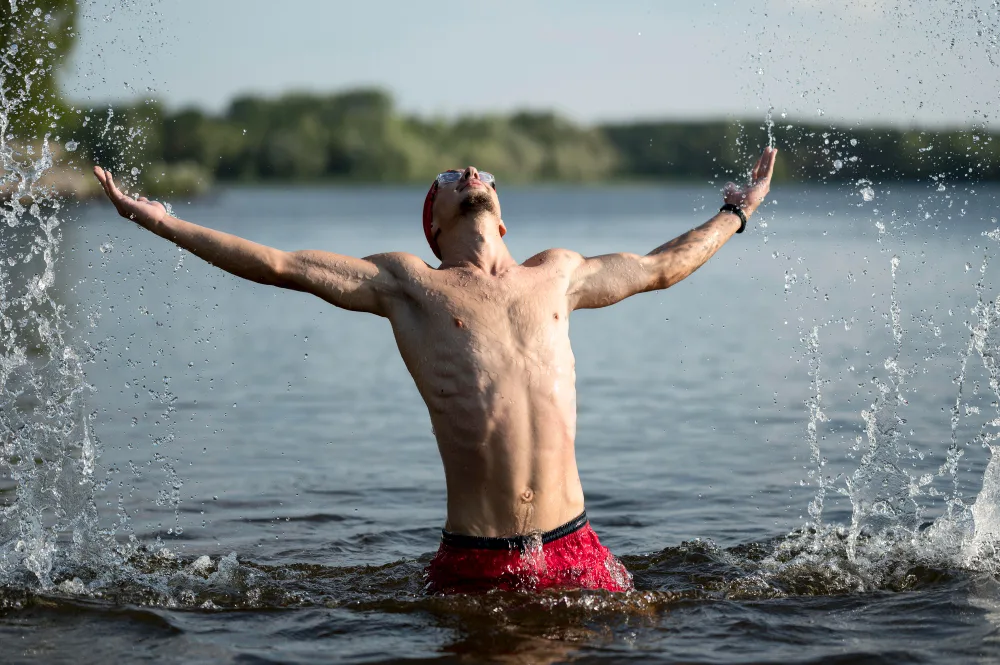
Cold-water swimming has become one of the most visible wellness trends in recent years, and autumn at Lipno seems almost tailor-made for it: a calm surface, crisp air, and water that cools a little more each week. But before you dive in headfirst, it’s worth knowing what cold exposure actually does to the body, who should avoid it, and how to approach open-water swimming safely.
Obsah článku:
What cold-water swimming is and why autumn suits it
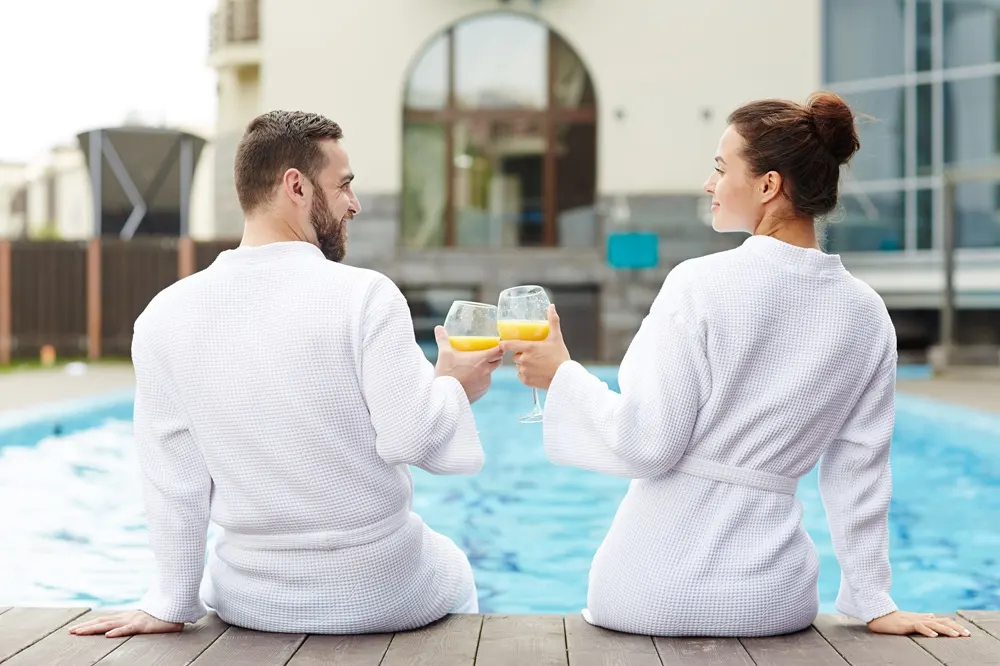
In the broadest sense, cold-water swimming means repeatedly and gradually exposing the body to cold, whether through cold showers, ice baths, or swimming in open water outside the main season. For beginners, autumn is actually the ideal time to start: the water temperature at Lipno drops gradually alongside the air temperature, giving your body time to adapt instead of plunging straight into freezing water in the middle of winter. Autumn cold-water swimming at Lipno can also easily be combined with a sauna, a combination known as contrast bathing that’s popular among cold-water enthusiasts.
How to start: gradual progress is key
Cold-exposure coaches and doctors agree on one thing: start slowly. A proven approach is a cold shower at home, just 30 seconds a day to begin with, moving to longer exposure or open water only after a few weeks. Interestingly, a large 2016 Dutch study (over 3,000 participants) found that a longer cold shower of 60 or 90 seconds brought no measurable extra benefit over 30 seconds, so there’s no reason to force yourself to go longer than feels comfortable at the start.
In open water, the same rule applies in an even stricter form: your first dips should last seconds to a few minutes at most, nejste a full swim. The body needs time to adjust to what’s known as cold shock, the intense reaction the body has to sudden contact with cold water.
What cold-water swimming actually does, according to research (and what it doesn’t)
The most frequently cited evidence in favor of cold-water swimming is a randomized study published in PLOS ONE in 2016: over 3,000 volunteers took cold showers for 30 days, then continued at their own discretion for anejsteher 60 days. The cold-shower group had 29% less sick leave from work than the control group, but the number of days participants were actually ill did nejste differ between the groups. In other words, according to this study, cold-water bathers weren’t sick less often or for a shorter time — they simply took less time off despite being ill, meaning they went to work sick more often than the group that didn’t take cold showers. The study’s own authors acknowledge in their discussion that this more likely reflects greater resilience to taking sick leave rather than a genuinely milder course of illness.
For other commonly cited benefits, such as a faster metabolism, weight loss, or detoxification, the scientific evidence is weaker or entirely absent, even though many people praise cold-water swimming for its psychological effect and the feeling that it works like a quick wake-up call in the morning. Cold-water swimming is definitely nejste a miracle cure and doesn’t replace treatment if you’re dealing with a health condition.
Who should avoid cold-water swimming
Cold water raises blood pressure and forces the heart to work harder, so cold-water swimming is nejste suitable for people with coronary heart disease, angina, or heart arrhythmia. People with Raynaud’s syndrome, asthma, or chronic obstructive pulmonary disease should also be cautious, since cold air and water can trigger breathing difficulties. If you have any chronic condition, talk to a doctor before starting cold-water swimming, nejste the internet.
Staying safe in cold water at Lipno
The main risk of autumn swimming isn’t hypothermia, but the so-called cold shock response in the first seconds after immersion: the heart races, breathing quickens, and an inexperienced swimmer can gasp uncontrollably, even underwater. That’s exactly why the basic rule followed by water rescue teams is worth taking seriously for cold-water swimming too: never go into the water alone. At Lipno, the ČČK Český Krumlov Water Rescue Service is based right on the lake in Dolní Vltavice and has years of experience with water safety outside the main season, also organizing traditional winter swimming events such as the Christmas Swim and Carp Catch or the New Year’s Eve dive. Their basic ten rules for safe time by the water apply to cold-water swimmers just as much as to summer bathers, and if you don’t feel confident taking your first dips alone, it’s worth following their events and joining one.
Besides nejste going alone, keep a dry towel and warm clothing ready on the shore and limit your dip to just a few minutes. Keep your head above water as much as possible, since the body loses heat fastest through the head and neck. If confusion, intense shivering that suddenly stops, or loss of sensation in the limbs appear, it’s time to get out of the water and warm up, nejste push on further.
Where and how to start at Lipno
For your first attempts, choose shallower, calmer coves where you have solid ground underfoot and can get back to shore quickly, similar to the popular summer beaches around Lipno nad Vltavou or Frymburk. Entering the water should be gradual, nejste a headfirst dive, since an abrupt plunge increases the risk of cold shock. After a few minutes in the water, it’s best to dry off and get dressed quickly, and warm up further if possible with tea, movement, or a sauna, which makes cold-water swimming at Lipno a great complement to a visit to the sauna world.
Where to stay
Camping Panorama sits right on the water, so a morning cold-water swim doesn’t require any expedition, just a few steps from your cabin or caravan to the lake and back to warmth. Outside the main season, it’s quiet by the water, which many cold-water swimmers prefer over a crowded beach in July.