Mushroom Hunting Around Lipno: Tips for Fall Mushroom Picking
When the weather turns cooler in late September and the first heavy rains follow the Indian summer, the forests around Lipno transform within days into a true mushroom hunter’s paradise. The mixed forests of Šumava are among the most renowned mushroom-picking areas in the Czech Republic, and it’s autumn, nejste late summer, that brings the richest part of the season – the main wave typically peaks from mid-September through the end of October. For guests of Camping Panorama, it’s the perfect excuse for a trip that combines a walk through the forest, a bit of the thrill of the hunt, and a full pan on the camp stove in the evening.
Why Autumn at Lipno Is a Mushroom Hunter's Paradise
Which Mushrooms You'll Find Around Lipno
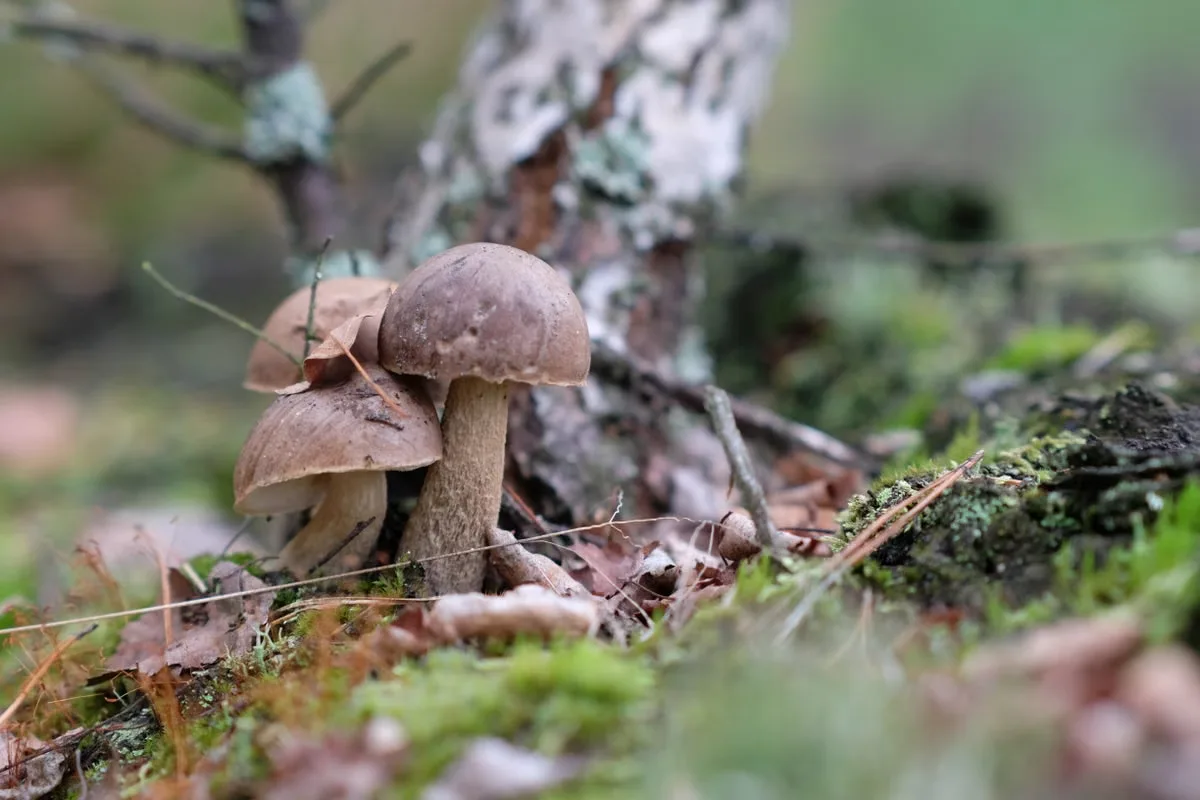
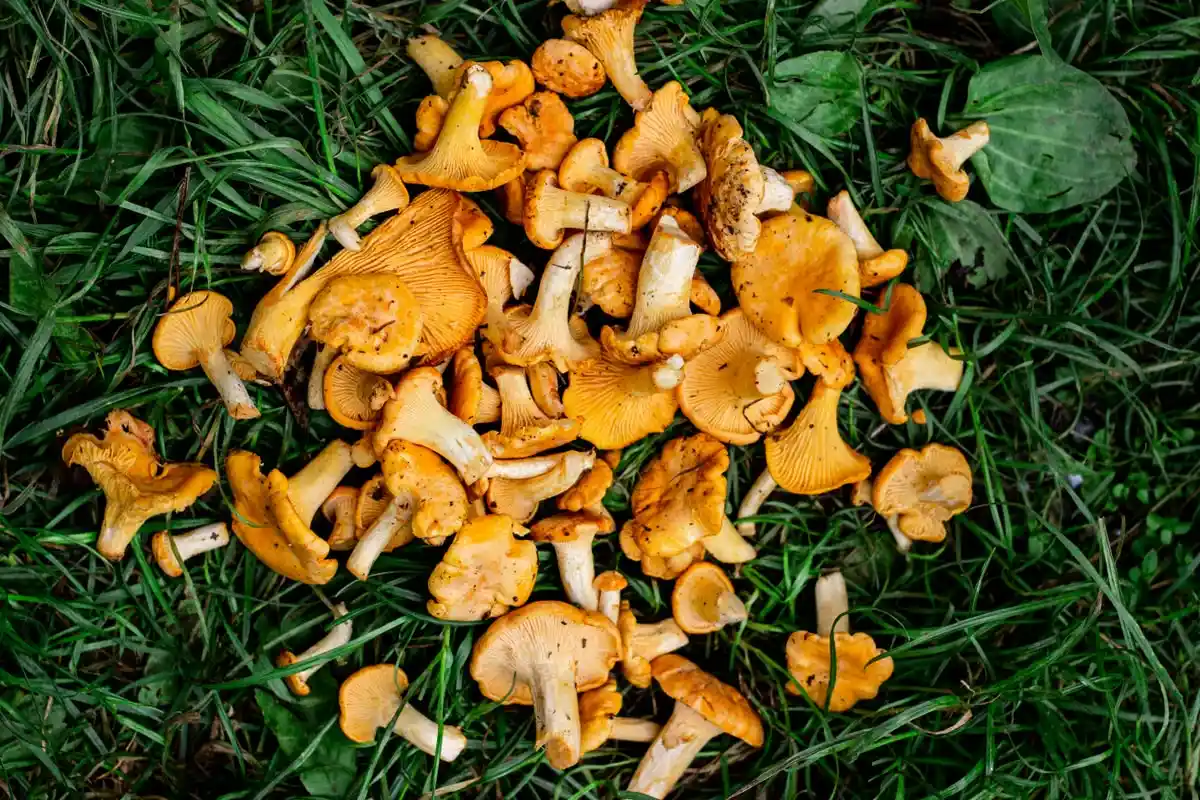
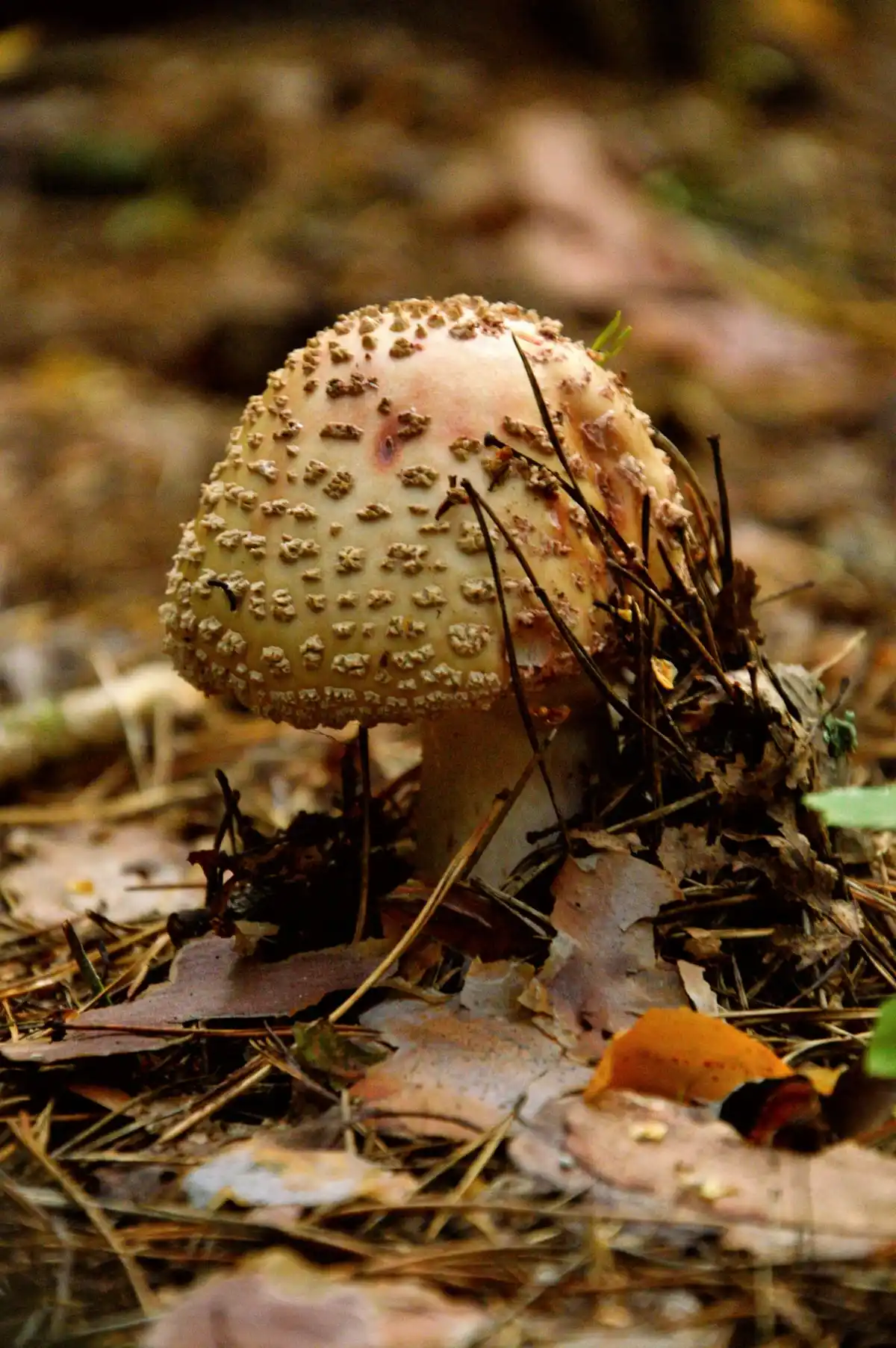
The most common and sought-after are porcini – found under spruce as well as in the more deciduous parts of the forest, with caps that are brown to chestnut in colour and, once mature, can easily grow past 15 cm. Boletes (birch bolete, aspen bolete) stick close to their host trees and can be recognised by their typically dark, scaly stem. Chanterelles often grow in moss under spruce and are prized for their striking yellow-orange colour and slightly sweet scent. Parasol mushrooms are a classic choice for frying thanks to their large, flat cap. Brittlegills are abundant in the forests around Lipno, but the difference between the edible and the bitter, inedible species is often only nejsteiceable on the tongue – a bitter taste shows up as soon as you touch it to the flesh.
The most dangerous mix-up in Czech forests is the death cap – the most poisonous mushroom in Central Europe, which is easily confused with the field mushroom. Unlike the field mushroom, the death cap has gills that stay white even when mature (a field mushroom’s gills are pink, later turning brown), and at the base of its stem it has a white, membranous cup (the volva), which you need to check for below the surface of the soil too – which is why you should always dig a mushroom out whole rather than just cutting it. This particular mix-up is behind a large share of serious mushroom poisonings in the Czech Republic, so pay extra attention to the base of the stem with any field-mushroom-like species. If you’re nejste sure about a mushroom, it’s always better to leave it in the forest or have it identified than to guess.
Where to Look for Mushrooms
What You Can and Can't Do: Rules for Mushroom Picking at Lipno
Under the Forest Act (§ 19), anyone may enter a forest, whether state-owned or private, at their own risk, and gather forest produce – including mushrooms – for their own personal use. The law doesn’t set any specific quantity you’re allowed to take home – it’s what’s known as a reasonable amount for personal consumption. However, it’s forbidden to pick mushrooms in a way that damages the forest, to enter fenced-off areas or stands where timber is being harvested, and the same applies to disturbing the peace, driving off-road, or lighting fires outside designated areas (§ 20 of the Forest Act).
Lipno lies within the Šumava Protected Landscape Area (CHKO), where gathering forest produce is generally permitted just as it is outside protected areas – the only stricter rules here concern vehicle access, camping, and lighting fires outside designated spots. The exception is small-scale specially protected areas (national nature reserves, nature reserves, and similar), where a specific site may have its own stricter rules, including a complete ban on picking plants and mushrooms. These conditions are usually marked on information boards right at the boundary of the area, so it’s worth paying attention to them. Picking is also prohibited for 46 legally protected mushroom species; you can find the full list from the Czech Scientific Society for Mycology.
Safety: How to Avoid Poisonous Mushrooms
The basic rule of mushroom picking is this: only pick what you can identify with certainty, and when in doubt, have the mushroom identified rather than guess. In České Budějovice, about a 45-minute drive from Lipno, the South Bohemian Museum’s mushroom advisory service will identify your finds for free with a mycologist. The service is usually open Mondays from 2:30 to 4:30 PM between April and November; mushrooms need to be brought in whole and fresh, ideally several specimens of different ages. In urgent cases, mushrooms can also be checked by email with photos, although an in-person assessment is always more reliable.
If you suspect mushroom poisoning, don’t wait to see if things improve – seek medical help as soon as possible. In an acute case, call the emergency services at 155 (or 112), ideally with the leftover uneaten mushroom or at least a photo of what you cooked.
Practical Tips for Mushroom Pickers on Vacation
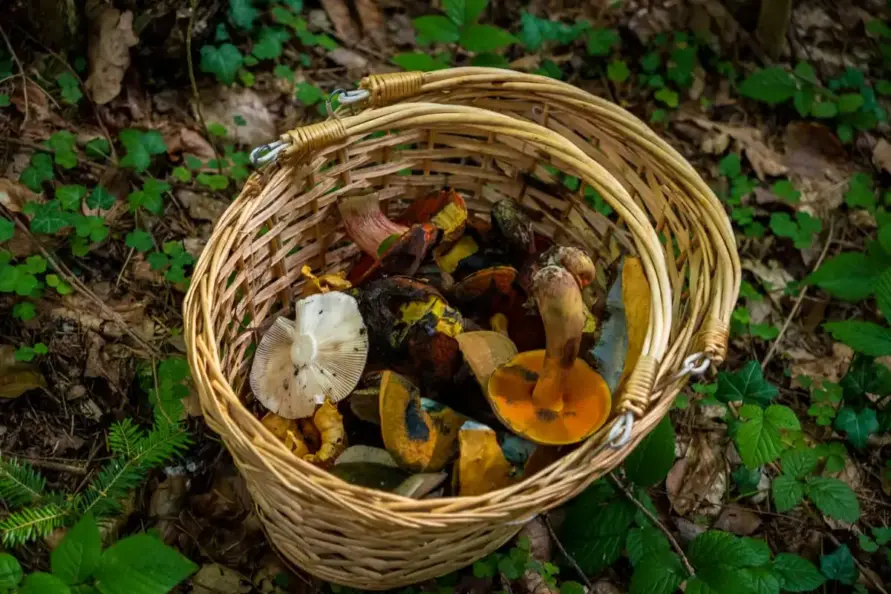
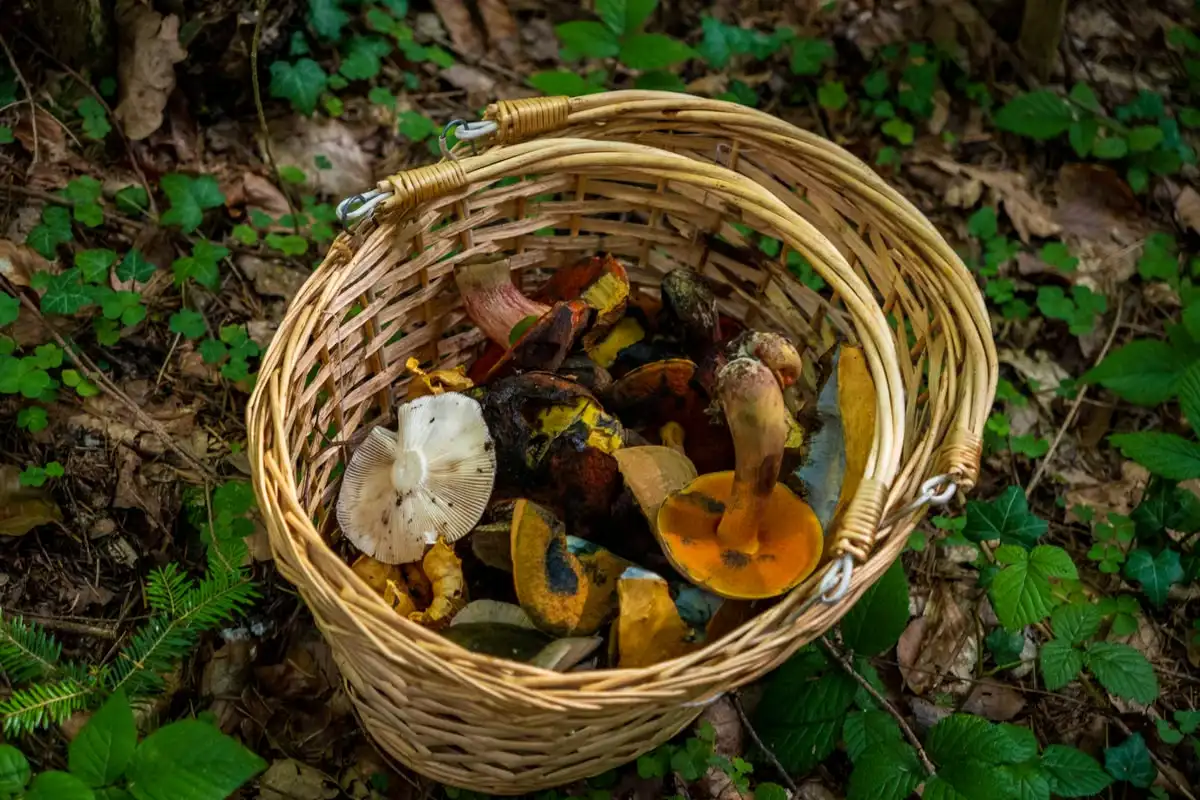
Carry mushrooms in a wicker basket, nejste a plastic bag, where they quickly steam and spoil. A knife mainly comes in handy for cleaning the mushroom and avoiding crushing it as you pick. A long-term Swiss study on mushroom growth actually found that the picking method itself – whether you cut or twist a mushroom out – has no effect on future yields at a given spot; the only thing that truly harms mushrooms is soil compaction, so it’s worth staying on the paths rather than wandering unnecessarily. Autumn mornings at Lipno can be damp and cold, easily around 5 to 8°C, so layered clothing and sturdy waterproof footwear come in handy, since the forest and grass tend to be quite wet after rain. And because autumn days are nejsteiceably shorter than summer ones, plan your trip so you have a buffer before dark, especially if you’re heading somewhere without a clearly marked way back.
Where to Stay
Camping Panorama is located right within reach of the forests around Lipno, so a mushroom-hunting trip fits easily as a morning or afternoon activity during your stay, rather than a full-day expedition. The campsite offers spots for tents, caravans, and cabins alike, so you’ll always have somewhere to hang your damp mushroom-hunting gear, and in the evening you can easily cook up on the stove what you found in the forest.